I’m 36, live in the suburbs, and in recent years have gone (legally) blind from Retinitis Pigmentosa. Voluntarily giving up my license was one of the hardest and most important decisions I’ve made. There is literally 0 public transportation here. Not even Uber or Lyft have come around.
America’s sprawl and dependence on cars is incredible. It wasn’t until I spent time in London, Oxford, and Paris that I could recognize how much everything here is built around the idea of owning a car.
So now my wife has to give rides to our four kids, AND me, and there’s literally nothing I can do about it except petition for better transit, and pray self-driving cars get here faster.
Being dependent on rides feels like being 15 again. It’s humiliating being picked up from a job interview in a parking lot with 200+ cars.
Out of curiosity, why give up your license? It's a great ID. You don't have to use it. I know plenty of people with licenses to carry concealed, but don't.
To you point about car dependence, not using one is humiliating, at least for me. I live about .25 miles from my office. I walk daily to and from (twice). I feel, and have seen, people look at me like I'm poor. It is a foreign concept to many that walking or biking might be better (especially in Florida where on those rare 30 degrees nights, me, a Hoosier, is right at home, but right now it's a balmy 68).
I, and several of my friends when I used to live in Phoenix, were big walkers. Its evening? go for a walk around the neighborhood. Walk to work, even though it was like 1.5 miles...just...walk.
Each of us were stopped at least once by police for being suspicious...near as I can tell (we were all >middle class white people) all that was suspicious was us walking on sidewalks. Outside of the biggest cities America is actively antagonistic towards walkers. My sincere belief is because of the assumption that they are poor and should be judged.
Even in big cities American urban design tends to strongly favor cars and ignore pedestrians. Here in Germany, any decent sized intersection will have pedestrian islands, often multiple islands just for a single side. In the states, these are relatively uncommon.
Or look at where the stoplights are. In Germany, they're set back such that it's impossible for a driver to go into the crosswalk and still see the light. This naturally encourages drivers to respect the crosswalk. Not so in the US, unfortunately.
I could go on and on, but really almost all American streets are hostile to anything that's not a car.
If you're talking about local, non-arterial roads, those are much worse for pedestrians in the US too.
1. At least here in Munich, most of them here have enough space for one lane of parked cars, and one comfortable lane of traffic; if cars happen to approach each other on such a street, one has to pull out somewhere, or sometimes they can barely squeeze by each other. Contrast that with the US, where room enough for two lanes of parked cars and for two lanes of traffic (albeit without any markings) are the standard.
2. Setbacks here, both for businesses and homes, are much smaller than in the US.
3. There are many "cut-throughs" and little paths that are only permeable to pedestrians and cyclists, not cars.
The practical impact of the above is that streets here feel more human scale, cars travel more slowly, and walking and biking are more convenient. I let my six-year old son bike on the road on local streets here to get to the bakery or train station, something I'd never do in the bay area, where I'm originally from.
They are. You've just accustomed yourself to the hostility.
Germany isn't even top-tier for active transportation; that title goes to the Netherlands. And even in the Netherlands, more money goes to cars than biking or walking, usually.
You can tell yourself all you want that walking is treated okay in the states, but budgets tell the real story of where priorities lie.
Disagree with the antagonism, though my sample is of course very small.
Coming from North Europe, where it's fairly natural to walk distances of a few hundred meters to do an errand, I and colleagues used to walk from a hotel in Rohnert Park to a Wal-mart on the other side of highway 101, whenever visiting the place and needing to do some shopping.
And each time there were people driving by who would stop at us and ask: "Do you guys need help, did your car break down?"
Very friendly people, apparently they thought we had a problem.
I should clarify that by antagonism I don't mean individual negativity or dislike for...
I mean conscious lack of interest at a design level in engaging those populations. The situation you describe, to me, is a manifestation of that cultural antagonism. That situation exists because society is squeezing out people who walk.
That's a different situation, you will also get questioning looks in Sweden when walking in the urban sprawl of upper middle class, but it's worse in the US. The OSM Surveyors Jacket came about in part because of a necessity, so it's really not only a US thing.
Really? I have walked in some Swedish upper middle class / sprawl areas, didn't notice any particular questioning looks, not to mention antagonism. Har inte gått i faktisk Solsidan dock.
The only area in Scandinavia where I met actual antagonism for walking was a neighbourhood in Århus; I lead a group of 12-year-old football players in a neat dual line through it by foot, and some "youth" started to throw little rocks at the boys. I guess they wanted to signal that it's their territory.
Otoh, drivets are also the ones taking the traffic regulations most seriously.
Pedestrians are inclined to jaywalk, and that’s pretty much it, but don’t get me started on bicycles…
Your comment is anecdata, basing these kinds of statements on personal experiences is not a good idea, the truth is we break the rules with the same frequency what ever mode of transport the use. Furthermore in the statistics for accidents in Sweden serious injuries drivers vs. pedestrian/bicyclist you can see that in ~80% of the cases it was caused by drivers.
There’s no good data because there is no statistically valid enforcement of rules of the road in bikes.
In part because the rules are designed for cars, I’ve always observed cyclists, including myself, breaking common sense rules at much higher rates than cars. Blowing red lights, riding on sidewalks, failure to signal, riding, etc.
Bikes are slower so you would expect them to cause even fewer accidents. 20% may not seem like it, but it suggests bikes riders are much worse at following the rules of the road than drivers.
In practice you actually see this with bike riders regularly ignoring red lights ect.
Cyclist here. A lot if drivers will be rude (or worse) to me on the road because of the sort of things you said. Based on most objective studies I've seen there is no real difference in the fraction of cyclists and drivers who regularly break the law. They break different laws, but I'd say drivers break the law in much more dangerous ways (e.g., speeding). Cyclists running red lights is a problem, but I can only think of a handful of times in my decade of cycling when a cyclist didn't check for oncoming traffic before going through a red light. In contrast I can think of more times off the top of my head when drivers blew through red lights without looking (most were obviously distracted), but that's to be expected as there are many more drivers than cyclists. Anyway, it seems to me that the fraction of drivers who are bad is about the same as that for cyclists, so someone's mode of transportation is not informative about whether someone's law abiding. Saying otherwise is not justified.
Minor tranffic violoations are rarely an issue it's the big ones like: I can only think of a handful of times in my decade of cycling when a cyclist didn't check for oncoming traffic before going through a red light. which tend to kill people.
Minor speeding (~15%) is not a significant hazard. Going through a red light is about as dangerous as doing ~50-100MPH over the speed limit which is very rare.
Other things like riding on lane markers between cars is blatantly ignoring the rules of the road and vastly increase the risk of death. Again about as risky as a car slowly driving on the sidewalk, which you just don't see.
Bike riders on sidewalks are again extremely dangerous and often lead to fatalities, but it's also very common.
PS: I worked with bike messengers who may be unusually bad about this stuff.
Well, my experience differs a lot, and I suspect I've seen at least an order of magnitude more cyclists than you have. I think it's a combination of selective attention and your experience with bike messengers that's potentially the problem. Bike messengers seem to be particularly impatient and more likely to violate the law to shave off a few seconds. Also could be the location. Of the cities I've spent non-negligible time in, I found cyclists in Baltimore to be considerably worse than cyclists in Austin or DC.
To address another point, even the "minor" speeding you mention is a significant hazard. 15% over the speed limit is 32% more kinetic energy. Combine that with the fact that speeding really does not save much time in most situations, I think it's a clear loser in a cost-benefit analysis. Perhaps on an empty highway it's okay. But a driver's time to destination in most cases is more limited by stop lights and traffic, and believe me, I know. As a cyclist who doesn't go faster than 25 mph it's really irritating to have a driver pass me dangerously, only to sit behind them at the next light for 2 minutes, or for me to pass them because they are waiting to turn. I have no detailed statistics for this, but it happens so frequently that I don't think speeding is likely to save much time. It mostly provides psychological relief for impatient drivers. (Your opinion, of course, may differ.)
> Other things like riding on lane markers between cars is blatantly ignoring the rules of the road and vastly increase the risk of death.
I don't "lane split" or "filter" as it's called, but it's worth noting that this is frequently legal (perhaps not in your jurisdiction) and it has its proponents, many of which tout it's apparent safety benefits. I don't think the data is clear about whether it's safe or dangerous on net. I personally don't think it offers any advantages, so it's not worth the potential risk. Also, many drivers encourage cyclists to do that to get out of their way. You should see how infuriated some drivers get when I take the lane at an intersection rather than filter through to the front. I've talked to cyclists who run red lights, and I frequently have heard that they just want to get away from angry drivers, and running the light allows them to do that. (I don't think this is the right approach.) The same applies to sidewalk riding, which is fairly clearly more dangerous, yet riding legally is often discouraged by drivers, sometimes violently.
In terms of speeding stop lights are a floor function. Make the cut and save 2 minutes fail and lose 2 minutes. You only see cases where they lose that bet, but it's just a numbers game.
As to speeding, we have actual data on this stuff. So it's easy to demonstrate the risks are very low directly from accident rates vs # of speeders. The risk of early death vs time saved actually favors doing 5MPH over the speed limit on highways.
As to personal experience I only have ~45,000 cyclists which may be high or low. But it feels like a very large number.
PS: People try any justify their behavior, but statistically bike riders regularly risk death.
> People try any justify their behavior, but statistically bike riders regularly risk death.
The story about the dangerous jaywalker and bicyclists is a big falsehood if you look at the data. As I said; cyclists have the same behaviour than others have in traffic. The truth is that cyclists live longer, even with all the risky behaviour you think cylists are prone to.
The thing that is risky is spending ones life in a car, on so many levels. You refrase things so it seems like cyclists are to blame for being killed by cars when we know that is actually not the case. Just because the party line today is that jaywalkers and cyclists are worse than others doesn't mean there is any actualy evidence for it.
Their are a lot of very biased statistics reported around bike related deaths.
Even with a lot of bike infrastructure, and a biking culture
Denmark sees 17% of traffic related deaths by cyclists which is vastly more than their share of miles traveled.
Their are augments around health benefits. But, these fail to show up in the data as Denmark has ranks #17 in Europe significantly behind even United Kingdom with it's well known obesity problem. https://www.reinisfischer.com/life-expectancy-european-union...
PS: You need or look at all related risks combined not just select a few. One risk rarely considered, is heavy exercise in traffic is very bad for the lungs.
> One risk rarely considered, is heavy exercise in traffic is very bad for the lungs.
While I agree air pollution is worth considering, "very bad" sounds like hyperbole to me. Definitely not anywhere near smoking. The solutions also are rather simple: change your route to avoid heavy traffic and/or wear an air filter. I've done both before and recommend the latter more, as it seems more effective, does not make breathing harder, and has other safety benefits as well. Also consider the length of one's commute.
It's also worth noting that air pollution can easily be worse when driving. In fact, while I can not find the link now, I recall one non-scientific article with some experiments run by academics suggested that net exposure to air pollution was higher when driving in some cases.
You are right that traffic pollution is very bad for the lungs, it's actually the cause of 30%-60% of all deaths related to lung diseases, but this is true for everyone not just cyclists. It's the same number of deaths as for sucides but with an inverse demographics graph of course, at least in Sweden. Those numbers are staggering and the solution to that is not to stop bicyclists navigating normal commute traffic.
I would like to say that I do look at the combined risks: There are atleast two longitudinal studies on Dutch and Danish bicyclists that show that using bicycling as an active mode of transport means longer life, basically it's an integration test were you get X% increase in a population by just commuting daily.
Here is some commedy that is obvisouly just Norwegians and Swedes being jealous, but it gives you some view on how we think of Danes, and what might affect their lives a bit more than bicycling, as with your link they are very interesting but irrelevant since they do not affect the same population groups.
Exercise increases the amount of lung exposure to particulate matter per unit time. Biking is also a slower mode of transit which increases risks, further cars have built in air filters which further reduce risks.
So it's really not equivalent. On the upside, bike paths need not be next to traffic and in those cases may reduce exposure.
I do not disagree with the dangers of air pollution it's just that if you look at large populations of bicyclists there are no significant elevation of risk compared to other populations in this regard.
The solution is not to scare people with baseless arguments.
I hope you don't take this the wrong way. My goal is to convince drivers that cyclists are not as bad as they think they are and that they should drive safer.
> You only see cases where they lose that bet, but it's just a numbers game.
I don't follow. Seeing both is pretty easy; they drive away. What I question is that the 2 minutes that one saves at most (likely closer to 15 seconds or so on average) is worth the extra risk to other road users. The asymmetry is the problem. You say cyclists regularly risk death, and sure, they do, though the risk is probably lower than you suspect, and drivers risk death too. A large fraction of cyclist deaths occur late at night with a drunk cyclist; remove those factors and your risk is a lot lower. For someone like me who goes out of my way to ride safely, my main (perhaps only) risk on the road is bad drivers, who are by large tolerated or encouraged by western society.
> As to speeding, we have actual data on this stuff. So it's easy to demonstrate the risks are very low directly from accident rates vs # of speeders.
The NTSB says speeding contributes to about 10,000 fatalities per year in the US:
Doesn't sound low to me. Maybe it seems low when you compare against how frequently people speed, but that's a red herring as far as I'm concerned. It's unlikely you'll die while smoking any particular cigarette, but clearly the net effects of smoking at significant. I focus on the net effects. I don't think the time the speeders save justifies the life lost, even neglecting those disabled, etc. As I said, I think speeding provides mostly psychological benefit.
> As to personal data I only have ~45,000 cyclists which may be high or low. But it feels like a very large number.
You have seen about 45,000 individual cyclists on the road? I find that hard to believe. That's comparable to the total number of transportation cyclists in Austin. For comparison, I suspect I've seen at least several thousand individual cyclists on the road. If I see only two new cyclists on the road per day I'll see about 7000 after 10 years. Seems reasonable to me.
> A large fraction of cyclist deaths occur late at night with a drunk cyclist
In single accident deaths at night with only a cyclist this is actually the most common case (70%-90%). In deadly accidents between car and bicycle it's not very common for the cyclist to be drunk about the same as always.
Pedestrians and cyclists generally don't present a serious safety hazard to others.
This is like complaining that people treat guns and knives with different levels of seriousness. Of course they do; both are potentially deadly, but one far more so than the other.
> cyclists generally don't present a serious safety hazard to others.
If they behave dangerously and put themselves at risk of being hit, even if they are the one taking the risk, the car driver will always be at fault, no matter what. And yes, like some others have echoed in comments here, many bike riders do not stop at red lights. I see that every - single - day, multiple times.
First off, you're wrong. Cyclists can absolutely be found at fault.
Secondly, cyclist scofflaw-ness is mostly a result of a transportation system that's hostile to them. The Dutch aren't nicer cyclists because they're born that way, superior to Americans; they're nicer cyclists because the system there largely respects people on bikes, and so the system receives respect in return.
Go to any city with widespread segregated bike lanes and bike lights, and you'll likely find a culture where cyclists are no more likely to break the law than pedestrians or motorists.
Third, motorists are hardly exempt from constant law-breaking. How often do people not signal, or roll through stop signs, or enter the intersection right after the light turns red, or park in a bike lane, or 'block the box', or tailgate, or break the speed limit? I've lived in enough places in the US to know that the answer is "constantly". And all that with a vehicle that's vastly more dangerous than any bike or jogger.
I mean, my god, one of the most common and stereotypical complaints in America about where anyone lives is "ugh, drivers in [state] are the WORST".
My experience is generally that it's safer to cross the street away from crosswalks. Typically, crosswalks are put in places that have subpar visibility in one or both directions, or at intersections where there are many more variables in play and potential decisions that multiple parties can make. Drivers will do unpredictable things if you are on foot and merely in the general area of a crosswalk.
If you cross the street on a straight-away with good visibility, you can gauge the speed of the traffic, determine a safe window, and cross easily, without disruption.
Maybe that was a Phoenix thing- I've walked in areas of all sizes (From gravel farm roads to some of the countries biggest cities) all over the country and never had the problem.
I can back this up. I'm British, my father and I were in the US and went to visit my uncle. We took the train out of Boston and decided to walk from the station to his house. Got stopped by the police and questioned. Amazing.
Pragmatism aside, surrendering my license was a significant step in the grieving process for me. I was warned by a vision counselor that losing sight would be like losing a loved one. So far that has been my experience.
A few years ago i started telling people "I don't have any ID" and, remarkably, they all found ways to do business with me.
As it happens I do have a driver's license but I leave it in the car. 99% of the time I am walking around with no ID at all, and my life works fine. You can fly without ID.
I do carry a passport when flying internationally.
I walk pretty much everywhere within a two mile range if I have the time. It's a bit meditative and I can also get a little exercise (if you could call it that) in.
According to WaPo, 70% of Americans are overweight or obese, so I don't think that, statistically, many people are really in a place to look down on you for walking.
I think the law requires you to give it up if you can't see well enough to drive. You can get an I'd card that looks a lot like a license, but doesn't permit you to operate motor vehicles on public roads.
I have. I’d have to move out of state and into a fairly urban city to get decent transit. The schools here are fantastic and I love just about everything here, except the lack of transit.
We may get to that point, but for right now I work remotely (platform engineering) and just grin and bear the rest.
If you get to the point of considering moving, you may wish to look into a college town. They'll typically have far more extensive transit than the average mid-sized city/town does.
Thank you dundercoder for sharing your experiences, would be very interested in the adaptations you made to your working environment as your eyesight failed. It also got me thinking about my own locale, and I would agree with volkl48. I live in Walla Walla, WA now, which has three colleges and a very walkable downtown. Sounds like you have kids, and we have reasonable public schools. It's a 45 minute flight to Seattle. There is a public bus system that covers much of the area; surprising for a US city of only 30,000 people. Really though you can cover the entire downtown area on foot. Sounds like as a suburbanite it might be more your speed over a metro area.
I still have some central vision, maybe 20 degrees field of view, so I can still see my laptop screen ok. I had to ditch my two 27” monitors because I’d get vertigo looking between them (usually hunting for the mouse pointer)
I crank up the text size so large my neighbors can read it, but not so big that it exceeds my visual field.
I use a screen reader to read docs. I’m super excited about the new AI powered narrators because listening to ANY of the older style readers for 30 seconds or more causes permanent rage conditions.
I tried Braille, but it’s like trying to be instantly productive using vim, in Chinese, while on the space shuttle during launch. I might return to it sometime because narrated code is horrible to listen to.
Try cranking the speed up on the synthesized speech. There are blind listeners that listen to synthesized speech at much higher rates, 600-800 wpm and up. If you crank up the speed a bit, it would probably help differentiate between normal speech where you have greater expectations on how it should sound, and something that's almost a different language.
What an American comment to make. Public transit works in many cities perfectly well and you can use it without fearing for your life, or your wallet. Children in elementary school take public transit unattended.
I live in San Francisco. I don't take public transit regularly but I've lived in this area for 17 years and have personally witnessed several incidents on BART, Caltrain, and Muni. I also lived near Koln Germany for four years where I took public transit hundreds of times without issue. I think it's fair to say that some places have public transit that is just safer than others.
I'm pretty sure public transit is safer when it's not viewed as something that's only for the poor who can't afford to drive.
When everyone uses it, then the share of regular people who just want to go somewhere instead of harassing others gets up. But if only marginal people take public transit, then of course you'll mostly encounter marginal people there. The problem is how to start making everyone take it again.
Yeah, that sounds really weird to me, in france I went to school alone starting at 7 years old (although it was on foot and really close by), then using public transportation at 10, and I was never in danger.
Well, I'm an American. I might feel differently if I were Japanese.
Here, children are driven to school by their parents. When school ends, the parents are there waiting in their cars. Kids mostly don't even play outside anymore.
Those of you thinking public transport is fine are likely at least a little bit physically imposing and/or you are in relatively fancy locations.
What a strange land. In the UK, I was using public transport and cycling to school by myself from the age of 16. I'm curious, are there large cities in the USA where this can happen? Are there any significant moves by politicians to wean North Americans off cars?
Conversely, are there large cities in other countries that are similar to the US, where this does not happen? I'm going to suspect the Middle East, due to ubiquitous air-conditioning.
16 is a bit old? I was 13. Many other children were 11. This was a city in the Midlands.
When I moved to London for university, there were 5-6 year olds on buses and trains, accompanied by an older sibling. And they were the rich children attending the private school I lived close to, normal children that age would live close enough to walk to their local school.
> I'm curious, are there large cities in the USA where this can happen?
Yes, GP appears to be ill-informed about how kids get to school in large parts of the US. In NYC, students take public transit (and are provided passes, if necessary) from approx 13 years old. The same concept applies in most cities I know of on the East Coast (I can't speak for further west, though it appears Chicago has a similar system).
It's because our news is completely unregulated and local news always spotlights and aggrandizes crimes and whatnot, so that the population is terrified of itself constantly.
Obviously if people took the time to look at the crime statistics, the chances of being a victim of a crime is less than half of what it was when I walked a mile to elementary school every day.
For the oddball crimes, that is true. Kids aren't actually getting swiped off the streets.
For more normal crimes, the lifetime chance of being a crime victim is serious. For stranger-on-stranger violent crime, there is a total lifetime probability of about 5.3%.
You might think "oh that is just 5.3% so no big deal", but the chance of dying in a fire is only 0.09% and we still bother with smoke detectors.
Violent crime is a life-altering event. Given the potential for horrific consequences, it is reasonable to be concerned about the possibility. Transportation choices change that risk.
I've been victim of violent crime. Somebody hit me in the face for no reason at all and ran away. While that sucks pretty bad, dying in a fire, or even just losing all my stuff in the fire, is incomparably worse. Being a victim of violent crime doesn't mean that you land in the hospital. Violent crime has a pretty broad definition.
I grew up in the suburbs and was walking to the bus stop by 8, and taking public transit to places by 15. It wasn't especially unsafe, although it would leave you stranded places after 6 in the afternoon.
> Here, children are driven to school by their parents. When school ends, the parents are there waiting in their cars.
Do parents get out of their work in the middle of the afternoon to drive their kids from school to home? Do they go back to work for the last couple hours after that? Or do kids have 8-hour schooldays?
Luckily my wife only works a few hours a week, so she was able to pick up our kids from school (before we opted for homeschooling). For my brother and his wife, they both work full-time. They can get some help from Grandma, some help from friends who have a stay at home mom, and some help from us. On days where none of that lines up, either he or his wife have to leave work, take kids home, and usually go back to the office. There is no public transportation available here and they removed school buses maybe 10 years ago as a cost cutting measure. When I was a kid, the school bus worked fantastic. It is crazy they don't run them anymore.
Some people have fully flexible time. Some people have a part-time job or two, so they simply don't agree to work shifts during the times they need to drive the kids around. Some people don't work, often because a single income is supporting a two-parent household.
Or they don't work, because the parent is expected to wait for the child in car, although the child is big enough to transport itself had there been reasonable public transport.
Good reasons such as? I think the rise of the dual income household is a major contributor to many problems. This is not to say that woman in the workplace is bad, I think a diverse workforce is a good thing. But the dual income family has lessened parent-child interaction and raised the average household income which I think raises general prices for just about everything, but especially housing. This makes it harder to get by as a single parent (which tends to affect woman more than men). And the increased cost of housing is a major problem and contributor to poverty and all the issues that brings.
It might have been better if the addition of woman to the workplace included an equal shift of men to a househusband role.
People are downvoting because you're missing the point. The unsafety of the situation is not because of the mode of transport, but because of America's failure to deal with crime.
Here in Germany, crime rates have been declining pretty consistently [1], with homicides and robberies down from "low" to "very low". The thought of getting mugged on the street or on public transit is just absurd to me. I don't know anyone whom it happened to. It's something that happens on CSI, not in real life.
[1] Except for internet-related fraud and Crystal Method abuse (since these are still pretty new), and stuff like unlawful border crossing (because of the refugee situation).
Please don't break the guidelines by posting like this again.
> Eschew flamebait. Don't introduce flamewar topics unless you have something genuinely new to say. Avoid unrelated controversies and generic tangents.
You've just engaged in an ideological rant about muslim rapists in a thread about people being too old to drive.
You linked to the Gatestone institute, twice. Started by a known anti-muslim zionist and the reporting has been repeatedly accused of deliberate inaccuracies.
You also linked to WND twice. A publication known for perpetuating shaky conspiracy theories and white supremacism.
You chose two extremely right-wing (and unreliable) sources twice each. Not one countering article did you submit as a comparison.
You're reading a lot more into that than I intended. He brought up crime in Germany. The links do discuss muslim rapists, but I'm not ranting about it. The point is that his assertion of low crime is unreliable in an environment where information is suppressed.
Blimey. I’ve been attacked once, in total, and that was as a teen and an adult intervened within seconds.
I used to walk to school if I missed the bus (or if I wanted to miss mandatory religious activities), and that took me an hour. Sometimes I’d walk home afterwards, because the school had a then-novel internet connection. I’ve walked a few hundred kilometres around Berlin in the last few months, and explored several other European cities by walking around on foot for hours each day. If you go to Venice, your only options are foot or boat, and the boats don’t go everywhere.
You may care to consider that people get held up in cars, even in their own homes.
If you're really concerned about mugging in public areas, there are basic safety steps that everyone can (should) take. Stick to well lit areas; don't wear headphones; don't use your phone; avoid any situation that doesn't feel right. If possible plan your route. In other words, have your wits about you.
Also, re the non-poor encasing themselves in cars. Crime increases when people perceive an increasing gap between the haves and the have-nots. Does this mean the rich should use footpaths to reduce mugging? Probably not. But it might mean that public transport should get major investment so it's not seen as a shitty option only for the poor. If that's really how it's seen, everyone who has no option but to walk must feel constantly pissed off.
I know several people who have been injured in car accidents through no fault of their own (While being in a car). Wouldn't you want a method of transportation which is safe for you?
Did you know that crime occurs on the roadways too? There is vehicular homicide, drive by shootings, auto burglary, and hit and runs. Being in a car does not magically protect you from crime.
I don't think this should be dismissed entirely, as it's still a risk in Europe. Especially at night. Every now and again someone suggests women-only train carriages or some other gimmick in response: http://www.bbc.co.uk/news/uk-politics-41020179 . Or Scotrail's occasional (more justified) alcohol-free trains.
But during commuter hours, there isn't usually space for crime. And a real comparison of injuries per passenger mile would be instructive - cars aren't exactly safe either.
I do think we should avoid painting public transport as a utopia when it also can have access issues. We should just recognise it as an equal option that can be more comfortable and faster than sitting in a traffic jam and cheaper than paying the real cost of parking (which is often subsidised or hidden in the US)
If you’re referring to me being more of a target, my experience has been the opposite. I have found that I’m generally given a very wide berth when I have my white cane out. Often people hold doors for me too. I have a suspicion that most would-be criminals have a concept of karma and fear that robbing a blind person would bring lots of extra bad luck to their table.
It looks like you've decided the risk is worthwhile. I hope your luck holds. I think I'd be completely terrified. I found big cities scary even when I was a strong/fast 20-year-old male.
My 96-year-old grandmother has macular degeneration in her eyes and neuropathy reducing sensation in her feet. She can neither see the road very well nor feel the pedals accurately. The state of Florida just renewed her license for six more years.
I'd say it's irresponsible of her to keep up the license, except she has no options. The town she's in recently made it illegal for residents of her park to drive their electric carts across the street to Publix or down the sidewalk to the doctor's office. Those are the only two places she needs to go. Some of her friends who had given up their licenses in favor of electric carts are now SOL. They have to rely on favors to buy food and go to appointments.
> The town she's in recently made it illegal for residents of her park to drive their electric carts across the street to Publix or down the sidewalk to the doctor's office
This right here is the problem - how? Why? Doesn't this violate disability discrimination law? I thought seniors were quite an effective voting bloc in cases like this?
Everybody in her park is furious about it, and you'll see people risking tickets. No idea about discrimination law. Supposedly it was for safety -- old folks in golf carts were deemed a hazard to pedestrians on the sidewalks. So they incentivize them to drive cars instead, at much higher rates of speed. Seems crazy to me too.
The UK exempts them from these requirements, so you'll occasionally see people driving them along the road. At 4mph. I'm not sure whether this is a good idea or not.
When my grandmother became too old to drive safely, we sold her car and had her use the proceeds for cabs to where she needed to go. When that ran out, her kids and grandkids covered the cab fare. It wasn't all that much more expensive than the car itself. I can imagine it being a hardship, though, for those with less means.
Uber has a lot of negative press, but if there's one way for them to turn all of that around, it's to pander to the older generation and to provide senior citizens either heavily subsidised or a subscription-based system.
They won't do it because it'll hit their bottom line, but being the ride option of both the young AND the old would go a long way towards repairing their reputation.
Absolutely. They vote in numbers, they put money towards traditional media, and as such they have a lot of power.
Regardless of their "political" power, it'd just be a nice thing to do. Getting old sucks, and if Uber could do something as simple as making sure that an older person doesn't have to sacrifice their freedom then it's something a lot of people would get behind.
Historically churches and other community groups, including the Masons, would help in this regard. It appears as if this gone now. For example, black churches use to have get out the vote buses that helped people register. They would work with their paritioners and the large community to make sure that people could get to DMVs or wherever the locality required people to sign up. It appears like that is largely gone. Masonry and church attendance are on the wane. The government as god seems to have grown in its place. Unfortunately, many of the new adherents don't understand community nor civics. It will be interesting to see what happens as millennials gain more power.
As a former Mason, the teachings are symbolic. Few people think they are historical. People don't really do symbolic anymore. We do TV.
Not be too much of a curmudgeon, but I don't think our society at this time has much of a philosophical bone left in it. As a result, we mostly reflect on ourselves as narcissists. Look at Facebook. It's use is a known cause of depression. We feel bad because others make their lives look so perfect or interesting. We get in flame wars on political topics. We no longer appeal to traditions like Locke or Rousseau. We don't reason about things. We feel and are offended.
If what I said is even mostly true, how do you build a society on that? At this point we've stared too long into the abyss. Perhaps we need the "make-believe crap" to bind us. Perhaps its not crap, but rather what the world is and our ignoring is leading to our own demise?
Belief boosted community. Black churches, unified by a belief in the intrinsic value of humanity, got people to vote, to march, and to change. Whites, Asians, and others, unified by a common core belief pushed against the violence and racism of their day to improve the lots of their fellow man. At the forefront was not a scientist, not a technocrat, but a preacher, surrounded by preachers.
At its zenith, as with all things lofty, religion started to fade. In its setting the government rose. It took up the mantle of diety. It became father. We live in its world now. We are poorer for it.
Government takes power from the people and apportions it to its acolytes. Organization for its own sake is the status quo. To streamline government is to unemploye millions. Our calf requires total subservience with little benefit.
Perhaps we’ll find a way to control our new leviathan. Maybe we can yoke it to till the soil of communal need. We could even do that by trying to preserve the dignity of man. To do that we might have to abandon our new truth that life is an accident. That man has no more importance than a rock. This might be a noble lie. We need something for we have only straw to grasp now handed to us by our new religion postmodernism.
There are quite a few countries with much lower rates of religious affiliation than the US, and decent societal values. NZ, Aus, Nordics, Swiss, Germany etc. And even if they have non-trivial rates of religious belief, its not the kind of fundamentalist and extractive religion that grips the US. If anything, the decoupling of religion from official institutions in the US has given it free reign to accumulate ever more soft power and wealth.
Those countries usually have "stronger" Governments too, with stronger social safety nets, and healthcare systems that don't try to shaft you for $40k when giving birth.
More to the point, someone should visualise the relationship between rates of religiosity and quality of public transportation, across a range of geographic areas. I can imagine the general trend, though there may be some outliers like Poland and Italy.
Content aside, this text sounds like a street-preacher in Battlestar Galactica or The Expanse.
Do you have any more writing on this subject? I have been working on an essay discussing the lack of this philosophical backbone in our ideologies we build up - the new religion of the intellectual liberals of today (traditional dictionary definition of liberal, of course). I can feel a similar emotion in your writing.
> There should be county sponsored transportation for medical appointments.
How's your experience been with that kind of service? There's a reason lawbreaking octogenarians still ride golf carts down the sidewalk to get to the doctor's office, hoping they won't get ticketed.
> Uber.
I'm sorry. Did I mention my grandmother is 96? Ninety-six?
That is true, but periodic Ubers are also way cheaper than owning a car. If you only need to travel once a week it would likely be far cheaper than car taxes, gas, and maintenance
1200/mo is about what I took home for a year after college. It wasn't great but I was still able to afford a budget smartphone to use things like a GPS. I do understand the position of senior who are not doing well financially and I think we should support them, but supporting them doesn't mean they get to live the exact same lifestyle they became accustomed to when they were younger while the rest of society has to deal with reality.
It could also be worth looking into GoGoGrandparent.com! 24/7 operators and they automatically monitor and file disputes if drivers go on joy rides. (Full disclosure: I work there.)
Yes, but you or another relative could order the uber for her. Are you sure there isn’t county based medical transport? Also since she is 96 she might be able to get away with an ambulance! It may take someone advocating for her but it’s not disallowed de facto.
Even if we want to preserve people's independence, we all tend to go blind (and deaf) eventually. As people get older, there will inevitably be a larger population that needs to be driven.
That's because prior to being too old to drive, they didn't give a fuck about the public transportation system. Actually, even after being too old to drive, they happily continue to vote against public transportation.
It's bizarre to suggest our transportation system is failing them. It's exactly the transportation system they voted for, the transportation system a good bunch of them built, designed, railroaded through poor communities, terraformed cities to support. It's been failing large swaths of people for many centuries, but that generation didn't bother. They built this shrine to the personal automobile.
It's not even a case of buyers remorse. For the longest time in their life, they happily took advantage of limitless cheap fossil fuels, plenty of unregulated cars and wide roads to drive them on, and the best part, they managed to put it all on the tab for the next generation. Its Caligula all over.
It's baby boomers. Overwhelmingly the baby boomers I know are all: driving is a right, not a privilege, and I'm insured and insurance solves all problems and mistakes, rip out those damn trees and put in more car lanes so I don't have to wait in traffice. Gimme! And my grandparents' generation were fans of the bus and trollies before big oil got them ripped out of most American cities in favor of buses, and wanted people in general to have an easier time to get around.
ha, imho, it reads as a stylistic choice that fits the exasperated tone I think.
But there's a certain logic to that statement too. American cities always had very wide streets, 100 years before the car was invented even. In hindsight, it's hard to rationalize why really, but it seemed to have been because of this obsession for utility and practicality. Those very wide rigid grids were a transport-oriented design choice. To keep the horse shit away, so carts could make U-turns, so you could dump your bathwater in the middle.
The tragedy was that those wide streets were the seed for cars eventually destroying urban cores. When cars were invented, they had the space for them right there. A street that was used for everything (markets, recreation, horses, ...), suddenly became a 4-5 lane highway filled with loud, stinking, dangerous cars. Of course nobody wants to live next to that, it's genuinely awful. It set in motion a vicious cycle of people moving out of the cores and needing more parking-infrastructure to accommodate that commuting.
>> More than anything else, self-driving cars could revolutionize seniors'
transportation options.
But the problem is created by the over-reliance on cars in the first place,
and the fact that cities are planned for cars rather than humans. Self-driving
cars aren't a solution, when the problem is too many cars.
A real solution would be some kind of pulbic transport that's as convenient
and as efficient as privately owned automobiles, but somehow we're much more
interested in trying to solve the much harder problem of vehicle autonomy.
For the record, I live in a town in the South of London, on the East coast.
From the first moment I moved here I was amazed at the number of people with
mobility issues -disabled folks, seniors, parents with prams etc- taking the
bus for shor hops around town. I understand it's very different in the US,
where owning a car is a very big deal, but it doesn't have to be that way.
Choices made in the past dictate the current situation; choices that can be
undone.
On the one hand, I don't want this to happen to me either (but I'm more likely to retire somewhere accessible than the suburbs). But on the other, this whole situation just screams entitlement. They'd rather stay in their houses with all of their stuff, which even their own kids don't want [1].
Just imagine if they would actually move out of their houses: it would open up more housing, making it more affordable to new homeowners. It would alleviate transportation subsidies to better serve others. It would lower ambulance costs and reduce time to service. Just by putting older folks closer to the care they need.
I agree with your sentiments here but the other perspective is that you've worked your entire life, saved up, built up a wonderful home with all your belongings and now at the end of your life you have to give up everything you've worked for. Possibly your home is one of the few things that give you comfort and peace.
My initial reaction to reading this - 'Hey old people, just die already!'
A more considered reaction - shouldn't you at least offer 'older folks' an incentive to give up their lives other than 'it'd be better for society'? I'll be one of these older folks in a few years, and were I to stay in my house into my dotage, I'm three minutes away by car from the emergency room, less than a minute from several groceries, coffee shops, barbers, laundries, parks, etc., ensconced in a building (a future coffin?) whose wiring, plumbing, masonry, landscaping, etc., are all known to me. Please feel free to enlighten this middle-aged goat on why he should be put out to pasture to give room to 'new homeowners.'
The article lists the incentives: mobility without a car, independence, and reduced risk of a fatal accident. It's about being realistic with your own constraints. I fully don't expect to be driving indefinitely, if I want to (continue to) live somewhere without transit I need to plan accordingly or look for options before it's too late.
Some do move to 'sheltered housing.' One of the issues is going gaga creeps up on you, thinking of my gran here. One moment you're doing fine, the next you're having to give up driving but at that point you're maybe beyond packing all your stuff, rehoming the cat, putting your house on the market, finding a new place etc.
I mean "nursing home" and "retirement home" are two different things. One houses the chronically ill, often old - at very high prices but payable by insurances/the-state and the other houses old people at merely high prices but these prices have to be paid by the residents and there's no way to make them low even cutting all your costs. And apartments and trailer parks that house seniors at a slight discount.
But yeah, you're basically right, selling one house to movement into uncertain housing is terrible decision and there's
Most old people don't have the money to move into a retirement home so where would they go if they sell their house? Even with high housing prices, the money from a home sale isn't going to net more than enough for 2-5 years in a retirement community.
And yeah I've dealt with these issue for both my parents.
A small downtown apartment in a smaller city would be affordable, easier to clean and maintain, have elevator access so it doesn't require climbing stairs, will have transit options and amenities in walking distance. It's what young people want to see more of, but NIMBYism (often by aging people) constantly blocks that kind of development.
I always get an inkling that buses (like Bolt/Mega/PeterPan) + the existing highway + roads are superior and more scalable than any other type of transportation, dollar for dollar.
Why do people push for rail? Self-driving cars obviously can enhance this (the bus idea), but I suspect they will create even more traffic if we insist on having 5 passenger cars be 75% empty. Buses are great because demand can be reallocated easily.
Imagine a place like New York, where buses can go out to the suburbs and bring people into the city and the evening and morning (say, 50% of the fleet), and during the day 90% of the fleet stays in the city doing intra-city transportation.
Rail doesn't have this flexibility.
EDIT: Rail definitely has its place, but you almost never hear anyone starting a bus project. Just curious to why there's relatively little mention of buses in the public transportation (new project) realm.
I imagine perfected public transportation would involve linking between self driving cars on the square mile level, buses on the square deca mile (is that a thing?), rail for a hundred mile radius and obviously planes thereon.
Because well-done High Speed Rail (HSR) is a blast over long distances. Certainly for city/metro areas a combination of light rail + buses as a web is the best option (light rail having the advantage of running emissions free), but the longer the distances are the better HSR is. The new ICE line Munich-Berlin with 4h one-way is so fast that it's actually threatening flight.
Also, traveling long distances by bus is really bad. Cramped seats, cramped everything.
I can attest to how awesome rail is. I recently took the shinkansen from Tokyo station to Sendai in Japan, and it turned an 8-hour car trip into a two hour train ride.
The seats were as large as business-class airplane seats.
It would likely have taken much longer by bus because of all the stops and transfers.
There are electric buses that run emission free. They have the additional benefit of not needing extremely expensive new infrastructure for starting a new line. I think they would work much better in low density settings like American suburbia.
> They have the additional benefit of not needing extremely expensive new infrastructure for starting a new line.
Only because of the sunk cost of building all those interstates. At some point, you're going to need to repair or rebuild them.
Which makes me wonder: What is the cost of a new kilometer of rail vs. a new kilometer of highway? And which one is cheaper to maintain? I don't have any intuition there.
I visited Japan a few years ago. There are regular extremely fast trains going between large cities and smaller ones. I estimated that the passenger capacity of trains stopping at one smallish city was equivalent to like 3x the passenger capacity of a major metropolitan airport in the US. From a big hub it's probably 10x that (maybe more).
The trains run very frequently, with reasonable fares. It looked to be completely sensible and fast to live in an outlying city and take the train into a larger one for work, whereas the idea of catching a commuter flight from a smaller outlying city into a major metro area in the US (or likely anywhere) is almost completely untenable -- too expensive, too time consuming, too irregular, and too much hassle.
Also the Yamanote line (circles inside Tokyo, goes thru Shinjuku and all other major wards) stops at each stop once every ~3 minutes during the day. It is incredible.
Quickly changing though. Shanghai intends to add on another 7 or 8 lines in the next 7 years for instance, with the intention of having everywhere in the inner rings within half a kilometer of a station. Change is the constant there.
And at least for the able bodied, bike shares pretty much make up for it in the short term.
Their public transit system is great, and you pay for it with rechargeable cards that can also be used for all sorts of other shit in vending machines and retail locations.
And unless you're (statistically) fairly short and thin for a westerner, you won't fit in anything.
But hot-damn does looking out the window at Fujisan while doing 300km/h do a good job at distracting you from having your knees around your ears.
I live in Japan and actually live in rural enough area that there is no train. Well, there was a train until 1968 when the bus company convinced the fishermen that the reduced fish stocks were due to the train scaring away the fish (not over fishing, of course!). Now there are no fish and no train :-(
Before I extol the virtues of the train system in Japan, there is one thing that you have to understand first. It is expensive compared to transit services in many North American cities. As far as I know, it's not subsidised by government, so you have to pay the full cost. The main rail system is owned by Japan Rail, but they are operated by individual companies -- each with a monopoly in their own area. Additionally, there are "private" train companies that both own the lines and run the trains. If you live in a very rural area (and it wasn't screwed over by the bus companies), you will almost certainly be using these private lines. If you want to go to a big city, it usually means that you have to transfer. Luckily the payment options are almost completely harmonised -- at least on the regional level. You can get pre-paid cards that work for all the companies in your region (with a very few exceptions).
I live in Shizuoka prefecture. To take the bus a distance of about 30 km it costs about $10 US (also not subsidised). To take the train, it's a bit cheaper (about $7). If you take intercity busses, the relationship switches. A 200 km bus trip costs about $30, while the train will cost about $50. However, the intercity busses only travel about 4 times a day, while the trains come every 15 minutes.
The main difference between the train and the bus is convenience and speed. The trains are quite fast. I often travel to Hamamatsu city from Kanaya city by train. Due to circumstances, my wife goes by car. I beat her every single time -- sometimes by hours. By car, there are lots of unexpected events: accidents, traffic jams, etc. On the train, there are very few -- really just suicide attempts and I haven't seen one in our area for years.
In Japan the trains are on time. Very, very, very occasionally the train will be 1 minute late. Once a year it will be 2 or more minutes late. Seriously, if the train is not on the platform 30 seconds before the scheduled departure time, people are looking at their watches in disbelief.
Part of this is because the trains are set up so that freight is generally able to pass and be passed. On private, rural lines, there is never any freight (though the trains often carry mail). Also the trains are all in good shape. I've literally never been on a train in Japan that broke down. When I lived just outside of London, the trains would break down every week at least. One of the other main points is that theft in Japan is virtually unheard of. When I lived in the UK, I heard that one of the reasons the signalling constantly broke down is because people would steal the copper cables for scrap. Culturally, this just doesn't happen in Japan, so it's a consideration you have to keep in mind if you want to emulate Japan's success with trains.
While my wife has a car, I don't like using it. If we go anywhere, it's usually by bus and then by train. It's only if we need a car at the other end that we use the car (for example, when we go to Hamamatsu, my wife takes the car so that she can take her mother shopping, etc). Because there is no train where I live, I end up always taking the bus.
Even though Japan is a country where punctuality is almost taken for granted, busses are not punctual. They suffer from the same problems that happen everywhere -- busses are really hard to predict. Sometimes the road is clear, and sometimes it is not. The busses usually end up being virtually randomly timed by the time they end up in the middle of their route. I almost always miss my connection at the train station. Because the bus comes every hour or so, it means I usually have to plan very carefully to ensure that I arrive on time. Often I end up arriving an hour early just to make sure I get there on time.
Before I got married, I went out socially a lot more. I discovered that even though the train station is 20 km away, it was faster (and more predictable) for me to ride my bike there, take a bath at the nearby hot springs and then go to the city by train than it was to simply take the bus there directly. This is where I got my love of cycling (and hot springs!).
As I alluded to earlier, a lot of the reason that Japanese trains work is due to Japanese culture. For example, companies that get a monopoly will rip you off, but only by so much. They truly have a sense of social responsibility. The UK moved from a national rail system to something similar to what Japan has and from what I can tell, it completely broke their rail system (I'll probably get some argument about that). However, from my perspective, it's pretty clear that rail is simply easier to make work well than busses. It doesn't necessarily follow that any area building a rail system will make one that works well (I come from Canada and though I love trains I am never going to give any more money to Via. Ever.)
> In Japan the trains are on time. Very, very, very occasionally the train will be 1 minute late. Once a year it will be 2 or more minutes late. Seriously, if the train is not on the platform 30 seconds before the scheduled departure time, people are looking at their watches in disbelief.
You should try one in the Western Japan. My daily commute on Hankyu line during rush hour is generally 2-3 minutes late every day that I usually plan for it to be late. And JR West is not faring very better either. But we do look at our watches, the departure board, and back at our watches in disbelief, yes.
> For example, companies that get a monopoly will rip you off, but only by so much.
Sounds like a rare victory of the good over its old nemesis, the perfect. I believe that a social environment that can pull this off will have a clear edge in many different ways, e.g. government can work so much better when it can be trusted that power abuse, if it happens, won't be excessive. Much better than pretend-saints who really aren't.
I'd lean towards narrowing that question down to is it the explanation or is it just a confounding factor?
Optimism mandates that it should hopefully be the latter. It doesn't take much imagination to assume that celebration of ruthless, "take everything you can" types could (in theory) also be minimized in larger, now mixed communities.
When you are driving, you're, well, driving. Most of your mental capacity is on the task at hand. The remaining capacity drifts from subject to subject with nothing to anchor it - no note taking, very limited communicating. Your basic needs (mental rest, hydration, toilet) are pushed to a rest stop schedule. Every stop sign, right on red, or on ramp is a new negotiation. Even choosing your music is a big task leading you to settle for the radio.
In a train you're simply transported sitting down. You can text, have a face to face conversation, look out the window, go to the toilet, buy reasonably priced drinks, read or work as you fancy. The occasional change between trains is a stronger punctuation in your journey than your car leaving the freeway, and still only requires a few minutes of cursory attention every now and then.
Edit: I didn't even mention the timing aspect! In Japan you could get the same train every day and arrive on time every day. Commute on the roads and you will always be wondering when exactly you will get to work/home and what you will do with the little random slither of spare or lost time. Of course, the accelerator pedal is right there so you always have the option to drive a bit more aggressively, so you will consider it every now and then, rather than thinking about something more meaningful to your life.
China's system has one major leg up over Japan's, which is that it's still pretty cost effective and has become faster and potentially more thorough in the years to come (China is a much bigger country, so building out a thorough system is commensurately harder, but the East Coast and some major cities inland are already built out). That said if you're a tourist in Japan you can just get a JR pass and do it unlimited for a low cost—that doesn't apply to locals though, where Shinkansen is often more expensive than flying.
I was living in China for the last 6 months, you can just show up to the station without plans usually and book a high speed train ride 5 minutes before you go, where you'll be whisked from Xi'an to Beijing, a 13+ hour, 1,000km drive (about the distance from Boston to Cleveland), in 4.5 hours, with huge, comfortable seats, panoramic views of the countryside flying by at incredible speeds, and almost nothing will change your expected arrival (traffic? forget it, delays? pretty rare). You get clean restrooms and food and almost no time wasted at security, no worries about checked baggage limits and fees, and the ability to rebook for 10-20 minutes from now if you miss your train, all of this for less than $80?
Imagine if you could on an afternoon you decide that you want to go to Miami from Charlotte, and you can just casually get up and be there by dinnertime without going broke? It's terrific.
Or if you're more into regional transit, you can go from Suzhou to Shanghai, a 2 hour drive, within 30 minutes for like $5 without planning, similar routes which expand access to Shanghai within an hour's reach of over 120 million people.
It allows you to live in a small, isolated city in the countryside, yet be served by the huge scale airports and business of a megacity, with only a small fee and short time on a comfortable train where you can work, read, meditate, rest, or whatever it is you want to do. It expands your possibilities and brings equality of access in ways you wouldn't realize until you are a part of it.
In comparison with buses, for longer distance it definitely makes sense. For travel within cities, higher reliability (eschewing traffic and potential for accidents), very high capacity, comfort (no abrupt stopping and going, for modern systems at least; also less likely to experience motion sickness, which makes reading, etc easier), speed (think express trains in NYC or being able to cut through very busy places), and from some people's perspectives, increased property values, are all good reasons for it. But it is true, you get 80% of the way there with buses probably.
haha. Just yesterday, somebody said. "git is just another version control system. Not need to change away from svn" Fair comment if have used git. But it is silly if you haven't.
Bus service in a population center without dedicated right of way is horribly slow. You can dedicate some right of way to buses (BRT, for Bus Rapid Transit) but for any large passenger volume, the economics of trains become similar or better.
Flexibility is a disadvantage - you shouldn’t plan your life around a bus route remaining high-quality or even extant, because the planners could revoke it at any time.
This is what I was going to say. A rail line encourages development and densification around the rail line. Being "x minutes away from the train station" is a selling point for apartments and it can even create whole new commuting suburbs. At least this is how it works in Europe/Asia
They recently changed the bus routes in my city (in Australia) and we are feeling the deleterious effects of such a change. My bus commute has become slightly better, but my partners has become very inconvienient, so now she drives to work.
If my city had good trains or trams we could have just chosen to live on a difficult-to-move tram line and forever removed ourselves from being 2 more cars on the road.
That depends how many people you need to move and how often you need to move them.
Rail has a high capital cost, but lower operating cost due to the fact that a single engineer (and maybe a conductor) can run a 2000 passenger train while a bus driver carries 50 - 100 people so you only need about 1/20th the number of operators.
Another drawback of buses on the road is that unless they have dedicated lanes, they are stuck in the same traffic as cars.
BRT in the English speaking world is hamstrung by the BRT creep as drivers demand their lanes back.
In Latin America, BRT is proven out as a cost-effective approach to mass transit.
Rail mainly offers comfort, a small incremental improvement in speed, lower manpower costs for drivers (offset by the massive capital costs) and greener running.
Comfort and speed should not be underestimated. There's a reason middle class people avoid buses.
Buses are great for getting people to the train, but probably only provided that the bus is a no- or low-cost addition to the train pass or fare. And middle class people will absolutely take buses that come reliably and frequently, especially once you get a plurality of them to feel comfortable together. Just like gentrifying a neighborhood.
Steel-on-Steel rail are generally also most energy efficient compared to rubber-tyred vehicle.
And IIRC, one of the most expensive part of rail building is the dedicated right of way, so if you are also doing that for self driving vehicle then might as well as go for rail (if there's demand, that is)
Are you sure that the operating costs are lower? Buses share the infrastructure maintenance costs with all other road users, whereas train infrastructure is extremely expensive and the maintenance has to be paid for by the train companies alone.
One reason is permanence. A bus route can change easily, a dedicated bus lane can become an everyone lane with a coat of paint. A rail line is much harder to change, for me this was a big factor in deciding where to buy an apartment.
> Rail doesn't have this flexibility.
Because trying to maximize the utilized capacity creates worse outcomes. If there is only service every 30 minutes at a slow time of day then less people will use it because it's less convenient, so demand slows more and services are cut further, etc.
Also see the Beeching cuts [0] in the UK, where closing rural and low-use railway lines led to decreased use of the high-use more profitable lines, making them less (or not) profitable!
Rail is faster and more comfortable than buses in my experience. The comfort is more than just less bumps in the road and less starting and stopping. Some trains even have bathrooms. The bathrooms on the (US) MARC commuter trains I've taken are considerably better than those on flights or Amtrak, for example. Buses usually have no such amenities, and when they do I'm told the bathrooms generally are disgusting.
In the US, for the most part, inter-city buses (in particular) are almost exclusively transportation for those who can't afford anything else. People lining up for a Megabus in NYC without any sort of covered waiting area aren't there because they prefer it to Amtrak or flying. And the Port Authority may not be the worst bus terminal on the planet but it's pretty awful.
People in the Northeast would also be well-served in these discussions by knowing that Amtrak falls into that same description in other areas of the country, especially the Southeast: where everyone smokes and drinks from brown bags, the shared rail means lots of stops, and stopping for hours because of a stalled car on the tracks is entirely too common.
The best part about the restroom on Greyhound is when it fills up and then every time the bus goes around a corner it sloshes over. Pretty soon there is raw sewage streaming down the aisle.
I can relate to this. One has to wonder how much of this is inherent to buses as a transportation mode vs the fact that it's normally the cheap option.
It's a mixture of both. I have taken a "luxury" bus to NYC with leather seats, WiFi, etc. It was fine although I still prefer Acela. (Prices were similar.)
I've visited Switzerland a few times, and they have an excellent system that combines trains and buses. The buses fan out from the train stations, and the schedules are all coordinated.
Public transit is one of the reasons why my family enjoys traveling in Europe.
Italy is the same way (albeit not so on-time as the Swiss). There are train stations which are always fairly near both orange "long distance" busses that visit smaller towns not served by trains. The train station is also near a blue, city bus station in reasonably sized cities. It makes it fairly easy to figure out.
When traffic grinds to a halt, rail is the only thing that moves at a normal pace, because it has dedicated right-of-way.
You can create bus lanes. But if you're talking about "going out to the suburbs", then eventually you're going to get stuck in the same traffic as everyone else. You still have to compete for the same intersections, and you're probably going to end up in places that don't have dedicated bus lanes.
In many ex-soviet bloc countries (e.g. the Baltics) and other countries with sort of 2nd-world level of development (Greece), railroads are terrible (either due to lack of infrastructure of inability of the government to maintain it) but bus service is excellent (easy to rapidly improve road quality with a new government, easy for private companies to spin up bus service).
Rail can arrive and depart at predictable times. That’s insanely important in a transportation system. Buses (at least those without dedicated right of way) are dependent on traffic conditions. I’ve regularly had to wait 45 mins or more for a delayed bus.
In practice for the route I use most, Harpenden - Kings Cross London: Train 25min, Car 1hr -1.5hr depending on traffic. Regular local busses 2.5 hrs maybe but I've never done that and no one does. The train does 90 mph (max) and the express ones stop once. By car, many many stops.
I theory sure you could drive your porsche at 150mph down some superroad that doesn't exist.
Well, yeah. The MTA in particular apparently has a 55mph max speed (same link). A car can compete. Keep in mind I'm not counting traffic, but obviously is (currently) a huge advantage for a train. I'm talking more about greenfield projects.
I used bus and car interchangeably there as per the link the top speed of the fastest rapid transit was 80 miles per hour. Even a school bus has a 70mph top speed.
Of course, I'm aware that things are much faster (literally) outside the US, but the OP was referencing the US.
The train between Washington DC and New York City is (slightly) faster door-to-door than driving, without going particularly fast. It’s at least two hours faster than taking the bus. In addition, it’s infinitely more comfortable than either driving or the bus. Weekend commuting would be pretty stressful without it.
Worth noting that this depends a lot on the type of service. The DC area MARC commuter train is definitely faster than driving to DC from where my parents live. The train schedule says 96 minutes, compared against 90 to 150 minutes driving according to Google Maps if one leaves at the same time as the typical train I'd take from there. This neglects other factors of course like the comfort of sitting on a train vs. driving in heavy traffic.
My impression is (for the US) that trains are the optimal way to connect major cities, while buses are good for connecting smaller cities. Ideally, of course, one would have a dense rail network connecting even small towns, as Germany does, but that's never going to happen in the US.
Major cities that are relatively close together. The Northeast Corridor works pretty well for the most part--at least the two ends of it do. The whole thing is a full day and probably costs more than a couple hour flight.
Various city pairs also work but anything longer haul has to be for the experience (or avoiding flying) even if everything goes according to schedule. NY to Chicago is about 20 hours for example. (And would be very hard to make fast because of the Appalachian Mountains.)
We can go straight through them if we have to. Chicago to NYC is 800 miles, and at speeds the Nanjing to Jinan line hits daily that is about 4-5 hours.
Depends on the traffic and the train -- during rush hour, a Caltrain express train from San Francisco to San Jose is almost always faster than driving. It can take 90 - 120 minutes to drive during commute hours (at 4:30pm, Google says 90 minutes), versus 65 minutes by train.
I don't disagree that a train is better in many situations. I'm more curious about situations where a city is prepared to make a 1B+ capital expenditure. For example boring a tunnel for a train vs. a dedicated bus lane on the highway + exit.
Is that dedicated lane cheaper? In many cities that are facing a traffic crunch, they've already made all of the "easy" road improvements -- for example, 101 in the SF Bay Area is pretty much all built in to the center median, so adding new lanes means adding outside lanes (which requires rebuilding every bridge and intersection).
It'd be cheaper, of course, to take an existing lane and convert it to a bus-only lane, but that's politically infeasible.
With buses you would still have traffic problems even if in theory it would help reduce traffic. As long as we have humans driving vehicles, there will traffic. Realistically, this won't change any time soon (probably never).
It is much faster to get from point A to point B with rail (metro, for example) than a bus.
Also, someone did a calculation that for buses to carry the same volume of passengers and NYC's L train alone when it's shut down for repairs, you would need to run them essentially bumper to bumper during rush hour.
Like others say, buses are slow, but that misses the point of the article.
Seniors can't or won't walk very far. While buses are more flexible than rail in this regard, neither work for seniors in suburbia. Suburbia is incompatible with mass transit. Seniors want to be able to board and alight within 2 or 3 blocks of their terminus, maximum. Until we get automated cars, the only way to achieve that economically is with density.
I often tell people that San Francisco is the perfect place for seniors.[1] Bus stops are usually a maximum of 3 blocks apart, sometimes only 2 or 1. And there are enough bus lines that there's at least one bus stop within a 2 block radius for the vast majority of residences, and often multiple stops for multiple lines within 2 blocks. In other words, you can pretty much get from any place to another other place without walking more than a few smallish blocks. Whenever MUNI tries to reduce the number of stops, irate and politically powerful senior citizens flood the hearings.
I used to live on a particularly maddening segment of the 3-Jackson line that literally had 4 regular stops on 2 blocks (5 stops in 3 blocks): https://www.sfmta.com/routes/3-jackson Not coincidentally that stretch had two large housing projects--one exclusively for seniors and another predominantly for seniors--directly on the bus line, plus a population that skewed older more generally. The 3-Jackson line has at least 1 stop for most every block; the line averages about 1 stop per block! (I counted 29 stops in 31 blocks inbound.)
For this and many other reasons, San Francisco is an amazing place for senior citizens, rich or poor. (There's a ridiculous number of senior housing and community centers, mostly invisible to people not in the know.[2]) But the mass transit system sucks for working commuters because the system is biased towards the needs of the elderly.
[1] And I mean it. I cajoled my mother to move here in 2011. She finally sold her car last year. For awhile she worked at a community center that provided free lunches to seniors, where several very wealthy seniors from Marin commuted into the city to eat alongside and converse with very poor seniors, simply because they wanted and needed the company.
[2] Interestingly, San Francisco is (or was) being sued by HUD for racial discrimination. The supposedly most liberal large city in the country had a housing system that segregated people by ethnicity--senior housing projects tended to be Russian, Chinese, Latino, black, white, etc. Except for black areas, this was pretty much self-segregation. I don't know the extent to which the city perpetuated it, but they didn't seem to try to do anything to change it. (There's a waitlist system for senior housing and the seniors, at least, seemed to assume that people of the appropriate ethnicity were bumped, depending on the neighborhood. But I think mostly it simply had to do that seniors--and people generally--find their way to public assistance through their social networks, and different social networks will tend to channel people to particular programs and outlets.)
I have a grandmother in San Francisco. It only works OK for her because she has a daughter with a car. Taking public transportation isn't something she could seriously consider.
I think a lot of people here are imagining themselves as "seniors" without really picturing what that is like. It isn't just like being a 30-year-old male, but with wrinkles and free time.
Going up those hills is something the young take for granted. The elderly have painful joints, weak muscles, bad eyesight, slow reactions, and poor balance. I just try to imagine my grandmother going up a hill, maybe with a walker... and I mostly can't.
Invulnerability to crime is something that young males often take for granted. My grandmother would be such easy pickings. She can't run and she can't fight. She could very quietly scream after the crime had happened, but only if she doesn't fall down and get knocked out cold.
Many have poor control of core body temperature. They are in danger if the weather changes.
Many are not strong enough to carry very much. Typically you bring stuff with you when you go places. The point is often to go shopping, and of course you'd want to bring a purse. This is not something that everyone can reliably do.
The impression I'm getting from this and other comments is that San Francisco is basically a bunch of small mountains where people get mugged.
I live in a pretty flat city, but there's so much transit in the inner city (<8 minute frequencies most of the day) that seniors just take it everywhere. It's safe, it's warm, there's room for grocery carts, there's special seating for the mobility-impaired....maybe it's just implementation.
Car-based transportation sucks at all ages, we just seem to rationalize how shitty it is for the young and able-bodied. The US is insanely car oriented and it is a huge step back in quality of life from most of the developed world.
Another one of those things I have to come to HN and read about the US situation in order to reflect on the situation at home. I never even considered a situation where I’d be ”trapped” at home.
It works like this: If you aren’t fit to walk to a bus stop, you get tax subsidized taxi (think it’s about 70 or 80% subsidized).
It's hard for a non-American to appreciate just how different their urban environments are compared to the US, and vice versa.
It was certainly a shock to me when I first arrived to the USA... "Why is everything so far away? Why does every building have a bunch of empty space around it? (i.e. mandated setbacks)" etc.
The lack of real cities is probably my least favorite thing about the USA.
The USA is so big and diverse it's silly to say that the it doesn't have any "real cities". I suspect New York City, Seattle, Chicago, Boston, Portland and others would be proof otherwise.
NY, Boston, kind of. Portland... a little bit, downtown, and starting, a little bit to be that way in some areas.
With the Supreme Court's Euclid decision in 1916, we've had zoning that has only gotten worse and worse since then, so most things built in the years following that have deviated from that sort of walkable, incremental city that we used to have here too.
Even 'real cities' in the US have a lot more garbage urban design than most cities in, say, western Europe. Even the denser ones like you frequently have silly car-oriented design, like minimum parking requirements, and huge swathes of the city that are mandated single-family housing only.
Comparing Seattle's transit system to, say, Munich's (where I currently live) is a sick joke. Munich is far more walkable and bikable, too. Of course, a big part of this is that a majority of the land in Seattle is zoned exclusively for, you guessed it, nothing but detached single-family homes.
As an example, I sometimes visit smaller cities (< 50k) here, and even then they still are highly walkable, moderately dense, and they usually have pretty good transit connections to other places.
There is a wide diversity of cities in the US. You can go to places like NYC, Boston, Seattle, San Francisco, etc. and see examples of cities with decently dense cores and functional public transit. But then you can go to cities in the South, for example, where it's almost impossible to get around without a car.
But you don’t really get to pick. Dense European style cities are outlawed in the US. Hell, dense European style suburbs are outlawed here. My pre-zoning code suburb has lots that are less than 3,000 square feet. It’s awesome—easy to walk and you see your neighbors all the time. But it’s completely illegal to build more neighborhoods like mine. The minimum lot size now is more than five times bigger—we have legally mandated suburban sprawl. And there is no justification for it. If people wanted to have big lots, developers would subdivide lots that way. There is no reason to mandate it by law.
Dense suburbs are only "outlawed" because certain places, usually at the municipality level, zone the buildings that way. You know it is also "outlawed" for most European cities to build too high vertically too right?
Also, it varies from city to city (and within cities). Although most of the 20-35 crowd probably would prefer a denser city, old people prefer owning homes with lawns, so they wouldn't even want to live in that kind of place to begin with.
You can get a place with a lawn in Europe, too; you just have to pay for it, or live further out.
It's very difficult to find a place like our house in Italy in the US: we could walk to schools, grocery stories, pastry shops, our doctor, cafes, pizza place, a few barbers and a tram stop to go downtown.
And that's in a suburb of a mid-size city (about 300K).
I live in a place like that in Lexington, Mass. I commute by bicycle (or wimp out and drive in bad weather) about 8 miles. Two groceries, the elementary school, three preschools, an amazing cookie shop, three pizza places, and a fantastic Chinese place are walkable. Oh, and two dentists and an eye doctor, plus your selection of churches. A bus line runs from there, every 15 minutes in rush hour, to the terminus of a subway line. Oh, and a public library.
Now, it’s not perfect: the T breaks down all the time due to criminal underinvestment, my bike commute is noticeably faster than driving through the traffic, the mass transit schedule is such that any route with multiple transfers is insane.
But I’m going to guess that the Italian and Dutch versions of this aren’t perfect either; it’s a matter of deciding which flaws to live with.
Zoning codes in the US are mostly copies of zoning code templates published decades ago, so even though every single place has its own, it's a little-modified version of what everyone else has.
Even dense US towns are zoned against density. Somerville, Massachusetts had a rude awakening 5 years ago when they discovered the entire city is in violation of the zoning code. Every single home is out of compliance for one reason or another.
That is very dependent on where you are at. We have suburbs around here with lot sizes of 2178 sf (for houses of ~1800 sf).
I don't really agree that developers are particularly responsive to the market in this regard, either. Or rather, they make quite a lot more profit from two 6K lot houses than they do from a more expensive house on a 12K lot. Builders always, always want to go for smaller lots unless they're selling super-premium houses of at least $1M (for context, the average house price here is probably right around $350-400K right now).
Minimum lot sizes are pervasive in the U.S. Many of the suburbs that do have smaller lot sizes are "grandfathered in" to the zoning regulations--it would not be legal to build a new subdivision in the same county with the same layout.
Your example does not show that developers are not responsive to the market. The fact that developers can make more profit on two 6K lot houses than they do from a more expensive house on a 12K lot simply means that there is more economic value in satisfying two peoples' desires for a 6K lot house than in satisfying one person's desire for a 12K lot house.
If you eliminated the minimum lot size, people who want big lots would have to pay a lot more for them to make it worth developers' while, and that makes total sense! One person buying a house with a 12K lot pushes out two people who might be perfectly happy with a 6K lot. They should pay more.
Sure, it's outlawed - in your suburb. It's not a nationwide ban, though. It's not even (I presume) statewide, or even city-wide.
(It may be true that there literally are no municipalities in the US with zoning codes that allow dense neighborhoods, but I would be highly surprised.)
The New Urbanist movement tried to recreate dense, mixed use, walkable neighborhoods like were the norm in the past. It was an uphill battle. They would take their plans to city hall and get told it could not be approved. They would then carefully scrutinize the zoning laws, rename some roads and other features as something else, rinse and repeat until something resembling their vision could get approved.
In most parts of the US, you can no longer build those dense, walkable, mixed use neighborhoods that make it convenient to live without a car.
It's outlawed in so many places because of the incentives at work. At the edges of a city, greenfield exclusive neighborhoods have a better chance of holding their value than neighborhoods that let people with less money buy homes on less land. Once an economically stratified city is in place, no one can opt out without losing money. Everyone has to opt out together, and the politics of that are the worst.
There was a study a Few years about about which cities and suburbs could be built under their current zoning laws. I remember it showing that Somerville—a dense collection of 3-decker houses near Boston—was completely impossible to build under its current laws. I don’t have the link handy, but happy googling.
It's hugely wasteful and ultimately not affordable, to build out such massive infrastructure that then needs to be maintained with taxes. Most cities have extracted the initial funding for this infrastructure: roads, water, sewage, storm drainage, sidewalks, overhead or underground cables from the developer. But the tax base can't really support that beyond the initial life for that infrastructure without raising revenue. All city and county fees, taxes, and fines all inevitably go up and quality of infrastructure still goes down.
And that's in cities. Extend it out to podunk and they have to be subsidized, even when they don't know that's what's happening. And it's getting bad enough many counties in the U.S. have started to revert paved county roads back into gravel because they simply don't have the money to maintain the paving. They're worse full of pot holes than gravel. And the locals don't want to pay their fair share which might mean a dozen families sharing 50 miles of road - it's the exact opposite of economies of scale. Their incomes obviously have not kept up with the cost of even maintaining local roads... but there's no market force that's really correcting for this either.
Maybe your favorite thing. As a urban dweller, I'm a little fed up by subsidizing people living rural lifestyles only to see them have (in some cases) 4 times as powerful a vote as my own. I suspect that if we removed the federal interstate subsidies, farm subsidies, internet subsidies, etc. your lifestyle would not be self sufficient.
Simply false. There are virtually no European-style cities in the US. If you think otherwise, maybe it's because you haven't actually lived in Europe? I live in Munich right now, and I've lived in several regions of the US, visited lots of places too, and can't think of any city that felt very much like Munich does, or even German cities as a whole for that matter. Perhaps you could enlighten me.
Except you can't, really, unless you're quite wealthy. There's a clear expressed preference for more housing (note massive rents on very small apartments in major US cities) but those cities forbid people from building more housing.
We have this system in Boston and it works alright (it's called "The RIDE"). Boston doesn't have great transit by European standards, but it's still better than pretty much everywhere in the U.S. except for New York. It's always crazy to me to read these transit threads and see so many people who can't comprehend a day to day life that doesn't involve owning a car!
How it works where I am is they have special buses for the old and disabled. You ask a day before for one to show up at your house, and then it will take you where you're going.
Cars are exploitation. Driving isn't freedom it's the most dangerous and isolating way to move people that exists.
The automobile companies have trapped us into debt and traffic laden commutes that waste hours of our short lives on this planet and cause roughly 30% of climate change.
Do something. Get rid of your car and push for better mass transportation and development near train stations and major urban areas.
Cars are pieces of metal to get us from A to B. Making them out to be something more than that is self deception. We deserve better.
I have a car in NYC. The subway system here is amazing, while also being an embarrassment.
But, the car provides the freedom to visit friends and family for a day or weekend. The cost is $200 per month parking and $150 per month insurance, plus the cost of the car, which is relatively low as we drive less than 500 miles per month.
We can visit family in 45 minutes or 2 hours (depending on destination), instead of 3 hours or 5 hours by rail. And, we can make all our departures at will.
I can't imagine giving up car ownership, and I don't think I'm deluded.
The flexibility of having a car is undeniable. However, pretty much everyone--including the U.S. Bureau of Labor Statistics, Consumer Reports, and the American Automobile Association--agrees that the total cost of ownership runs to US$8000-$9000 per year for the average person. The cost might be a lot lower for you, but most people are paying a lot of money for having a car at their disposal without realizing how much they're spending.
He is saving about 5 hours each round trip. If his time is worth $50/hour, then $8000 for car ownership gets him 32 trips. Add a few more to account for the cost of rail ticket prices.
He breaks even if he takes that trip about 3 times per month and never finds any other use for a car.
Consider that this way: the time you spend sitting at a desk to earn the money to pay for your car is commute time.
How long does it take the average person to earn 8-9k (after tax)? I think at $50/h that might be an additional 5 hours work per week or an extra hour on your daily commute. For many people it might be more like 2+ hours. Given this, I would be very surprised if most urban dwellers wouldn't have more available time/money if they ditched the car for a bike.
When I lived in Sydney I found that my car was sitting idle for the majority of the time. I did the sums and even with free parking at my apartment, it would have been cheaper for me to just rent a car for the days that I needed it (like a weekend trip, a shopping trip to the suburbs/ikea, etc) than to own it outright. I had coworkers that did that any it was fine.
If you look at it financially, you owning a car is the same as owning an option to rent a car at any time. The less you drive it the more the ability to have it available costs you.
If owning a car and renting a car occasionally were exactly the same price, I'd still prefer to own a car. Picking up and doing the paperwork for a car is a big hassle, and takes away a large part of the convenience of owning a car.
It's only a problem until you do it. If you are a regular customer the paper work is easy both for you mentally and for the provider of the rental car, and if you join a car pool you just check where there is a car free and go there to pick it up. I usually parked my cargo bicycle beside the carpool for easy transport home.
In Sydney at least, there are a handful of car rental services that allow paperwork-free car pickup, the location of the nearest car, the rental procedure and payment are all handled entirely within an app.
Exactly, you end up paying a premium for the option of having the car available at any time you want, also without filling out rental paperwork. Though for that you have to pay for regular maintenance, registration, licensing, insurance, parking, etc.
Because I live in Melbourne, Australia, and $200 USD per month is literally what someone pays me and the spousal unit for our car space after conversion from AUD to USD, and I'm not in the CBD, and I'm assuming (i think correctly) car parking is far cheaper here than in new york city...
Brooklyn. More specifically Park Slope / Boerum Hill / Gowanus. We are in a newer high rise with a garage on premises. The cost of parking also gets us some space to store some items.
My grandfather I think just gave up on life after he lost the ability to drive. Taking taxies in St Petersburg, FL in the mid 1990s just sucked. Inconvenient, expensive and slow. I wish he was still alive today and I could give him an Uber/Lyft account.
The old and the poor are increasingly left out of public transport.
The city where I used to live removed the bus routes from the poorest parts of the city and opened up new routes to the richest part. Buses on the new routes were almost always empty...rich people own cars, you see.
The city where I currently reside simply shut down their entire bus operation instead of jerking around poor people.
Not only seniors. Kids, low income, people with health problems, they all are strangers in their own city with the current system. All this just so that young able people can drive. Of course all this can fire back because if you are the only one that drives and the rest in your family don't, then you are the driver.
We can't wait for autonomous cars to arrive. We need to invest in our cities and rebuild them to make walking and cycling safe and efficient for everyone from children to the elderly. We need to invest in public transportation systems that everyone can use.
I tried having the Uber discussion with my grandmother. We tried to tell her that its all the same mobility that you're used to. We tried explaining that this isn't some patronizing service for seniors but in fact something everyone is doing. We tried explaining how its actually more economical then owning a car. We tried to explain that letting my Grandfather stay on the road is a terrible idea that will get them and/or someone else killed. My aunt even got her an ipad and showed her how to use the damn thing. FFS you press the button and a car comes. The concepts not hard and she's not that senile.
But what do we get in response for all our efforts? "I just don't want to."
Even in the face of viable technical solutions to the problem of old people on the road, you still have to solve the unsolvable issue that old people are insanely stubborn.
Hong Kong has minibus as public transit, which allows for about 16 passengers per ride. Maybe it is a economical way for seniors' transportation? As it's up keep cost should be lower than a normal bus.
It's just the title of the article, and yes, I think all or most people here are well aware of the fact that not everybody lives in the US.
When I saw it, I didn't know what "our" referred to, until I read it - I didn't assume that the use of this word necessarily implied it had anything to do with my arbitrary country / community / culture / etc.
I think this is an awful situation, but at what point do we call seniors’ desires unreasonable? Is their want to stay in their suburban homes which are designed for cars really something the state should be concerned about when the working poor struggle to afford the subway?[1]
I think we should make relocation easy for the elderly who aren’t able to get around. I think it is terrible if they can’t move from their houses to places easier to get transportation from. But I really don’t see how this problem is more urgent and important or even independent of the general problem of people not being able to afford housing/transportation. Are we supposed to prioritize the elderly who already have houses over those who don’t?
Imo some level of service even in areas not all that favorable to transit is reasonable. Or at least, I think it's possible to do at least slightly better. I now live in a fairly rural part of the UK, a remote region (Cornwall) that has no real urban areas. And yet just about every population concentration of over 1000 people or so, here, has a bus that does at least one round-trip a day. Towns of over 20,000 people have very good, regular service. Of course it's subsidized, and in the smaller villages it might literally only be once a day in each direction, but a service does run.
In many American towns and suburbs it seems not even that level of service is available. And it's not due to the distances or population density either. I used to live in a suburb of Houston, TX that had 60,000 people, was about 20 miles from downtown, and it had no bus service! Now I live in a smaller and more remote town in the UK, and it has decent bus service.
France have a peculiarly Gallic compromise - the light quadricycle. It's a class of vehicle weighing less than 425kg (~940lbs) with a top speed of no more than 28mph. Anyone aged over 14 can drive a light quadricycle without a license. They're a fixture of everyday life in rural France, providing independent transport for teenagers, the elderly and habitual drink-drivers.
They're deathtraps for the driver, but their limited speed and distinct lack of structural integrity mean they pose minimal risk to other road users. It's far from an ideal solution, but it seems to work. I understand that golf carts are a popular mode of transport for elderly people living in some private retirement communities; perhaps it would make sense for US states to legalise their use on the public roads.
That's an EU-wide type of quadricycle - the vehicle category is called L6e or L7e. It's a good regulatory slot for light EVs too and they're sold in many countries, though you need a driver's license usually.


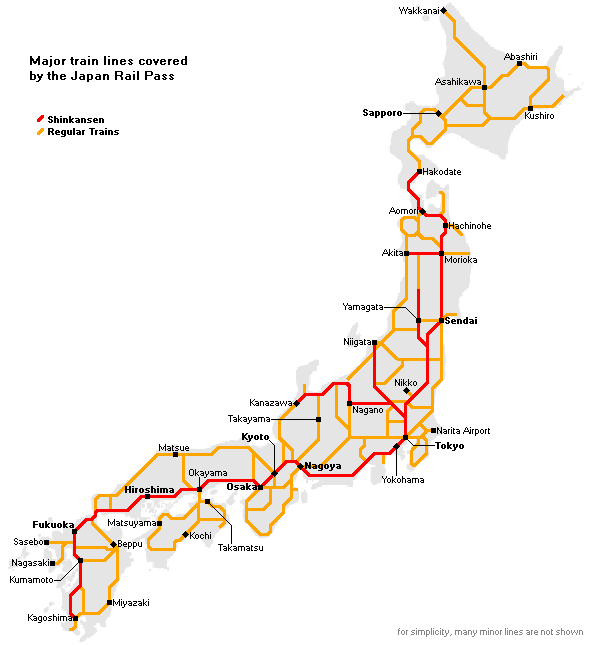
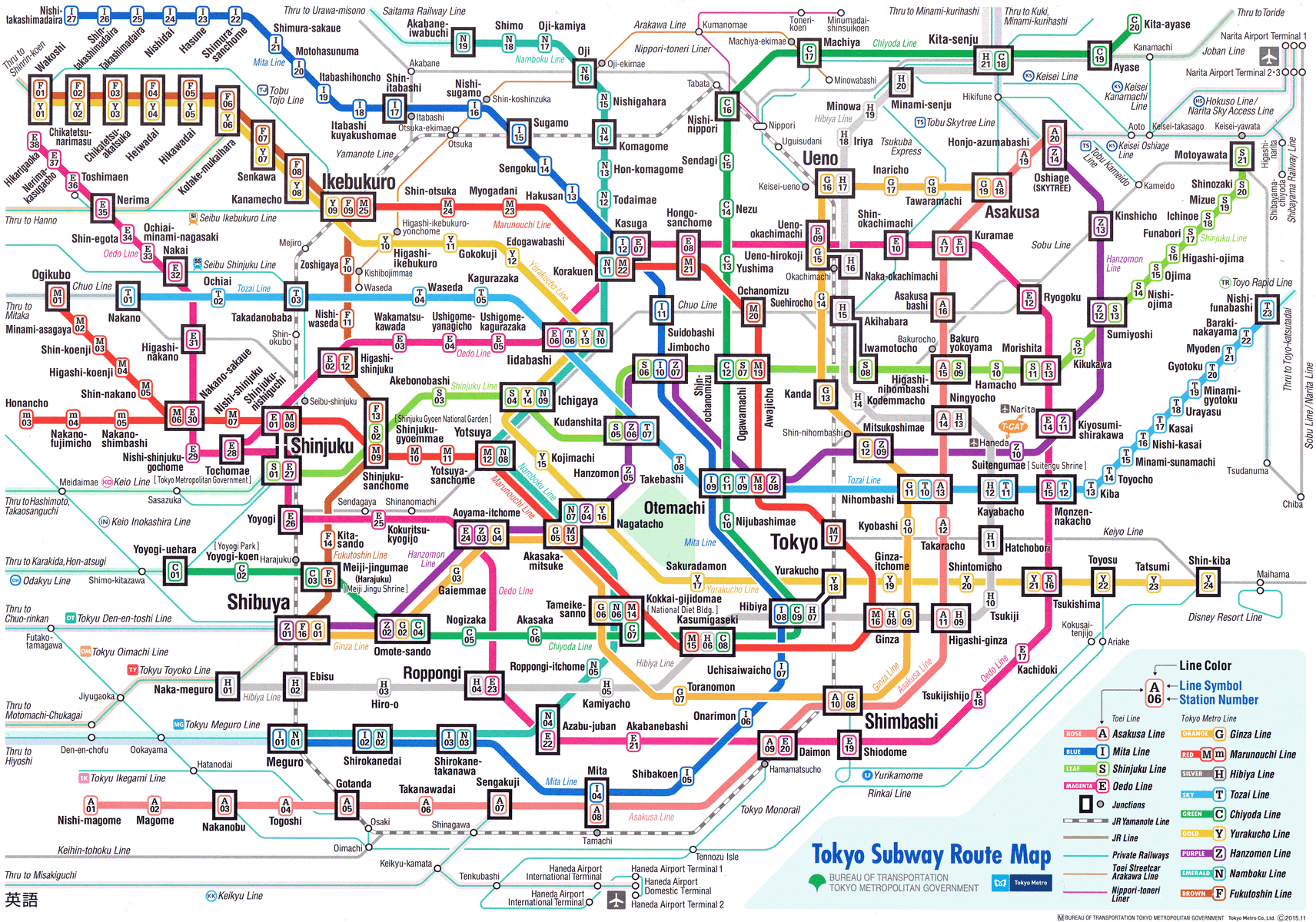
America’s sprawl and dependence on cars is incredible. It wasn’t until I spent time in London, Oxford, and Paris that I could recognize how much everything here is built around the idea of owning a car.
So now my wife has to give rides to our four kids, AND me, and there’s literally nothing I can do about it except petition for better transit, and pray self-driving cars get here faster.
Being dependent on rides feels like being 15 again. It’s humiliating being picked up from a job interview in a parking lot with 200+ cars.